


Best HABA My First Games for toddlers in 2026
Best overall: My Very First Games - First Orchard. Best for a short cooperative session: My Very First Games - Hanna Honeybee. Best for construction fans: My Very First Games - Building Site. Best for hands-on stacking: My Very First Games - Animal Upon Animal Junior. This 2026 guide matches HABA first games to the way your toddler likes to play.
- For HABA first games, choose My Very First Games - First Orchard for cooperative play with chunky wooden pieces.
- My Very First Games - Hanna Honeybee offers cooperative play in 5–10 minutes for 1–4 players.
- My Very First Games - Building Site combines cooperative matching and memory in a listed 5-minute game.
- My Very First Games - Animal Upon Animal Junior suits children who enjoy stacking rather than matching.
Why this matters
A first game should give you something enjoyable to do together. Choose the activity your child already enjoys, then check the individual game's age guidance before introducing the rules.
What makes the best HABA first games?
For your 2026 shortlist, focus on these differences:
- Play style: cooperative play, matching or stacking.
- Handling: pieces your child can comfortably manage.
- Session length: a game that fits your available time.
- Player count: room for everyone joining in.
- Theme: fruit, bees, builders or animals that catch your child's interest.
HABA first games at a glance
| Game | Best for | Standout feature | Key limitation |
|---|---|---|---|
| My Very First Games - First Orchard | A first cooperative game | Chunky wooden pieces designed to be easy to grasp | Not the choice for individual competition |
| My Very First Games - Hanna Honeybee | Short cooperative sessions | Listed for 1–4 players and 5–10 minutes | Not a stacking-focused activity |
| My Very First Games - Building Site | Construction fans | Cooperative matching and memory; listed 5-minute playtime | Not the choice for an extended game |
| My Very First Games - Animal Upon Animal Junior | Hands-on stacking | Animal-tower play for 1–4 players; listed 10-minute playtime | Stacking adds a physical challenge |
1. First Orchard: best HABA first game for cooperative beginnings
My Very First Games - First Orchard introduces toddlers to cooperative gameplay using chunky wooden pieces that are easy to grasp. Choose this orchard-themed game when you want your first game purchase to centre on playing together, rather than choosing an individual winner.
First Orchard is the best overall HABA first game at Habauk for toddlers beginning cooperative play. The combination of a shared activity and graspable pieces gives this recommendation a clear purpose: a first experience of joining in with a game.
First Orchard pros:
- Cooperative gameplay makes this a shared activity.
- Chunky wooden pieces are designed for easy grasping.
- The orchard theme gives you a familiar subject to talk about together.
First Orchard cons:
- Cooperative play is the wrong fit if you specifically want individual competition.
- Choose a stacking game instead if balancing pieces is your child's main interest.
Best for: parents choosing a first cooperative game, rather than replacing a particular favourite activity.
Before you introduce the rules, let your child become familiar with the pieces while you supervise. Name what you are handling and follow their interest; this is a suggested introduction, not an alternative set of official rules.
When you move into the game, use the supplied instructions. Keep the distinction clear between exploring the pieces and playing a round, so you can enjoy both without turning either into a lesson.
Verdict: Buy My Very First Games - First Orchard as the default cooperative starting point.
2. Hanna Honeybee: best HABA first game for short shared sessions
My Very First Games - Hanna Honeybee introduces learning and cooperative play with a bee-themed game. Its listed playing time is 5–10 minutes, with 1–4 players, making it a useful choice when a short shared activity is your priority.
Choose this game because you want cooperation in a defined playing window, not simply because it sits near the top of a list. A bee theme also gives you a different starting point if your child is more interested in little garden visitors than orchard fruit.
Hanna Honeybee pros:
- Cooperative play suits a shared-game preference.
- The listed 5–10-minute duration fits a short session.
- The stated 1–4-player range gives you flexibility over who joins in.
Hanna Honeybee cons:
- This is not the stacking-focused choice in the shortlist.
- A short game is not the best match when you want one longer activity.
Best for: families who want a cooperative game with a listed short duration.
Treat the duration as planning guidance, not a countdown. Your first introduction can include time looking at the pieces and reading the instructions together; that preparation is separate from the listed playing time.
For your 2026 choice, decide whether the bee theme genuinely interests your child. If both cooperative options appeal equally, First Orchard remains the default here, while Hanna Honeybee earns its place when the stated short session matters most.
Verdict: Buy My Very First Games - Hanna Honeybee for short cooperative play.
3. Building Site: best HABA first game for construction fans
My Very First Games - Building Site brings Bruno Bear and his team into a cooperative matching and memory game. The product description lists 1–4 players and a 5-minute playing time.
This is the most direct choice for a child drawn to construction stories. The theme gives you a reason to pick this particular game, while matching and memory distinguish the activity from the animal-stacking option below.
Building Site pros:
- Construction gives the game a clear theme for interested children.
- Cooperative matching and memory combine in the same game.
- The listed 5-minute duration is the shortest stated duration in this shortlist.
Building Site cons:
- Choose something else if construction does not interest your child.
- The short listed duration does not suit a search for an extended game.
Best for: little construction enthusiasts who enjoy matching activities.
You do not need to make a construction fan try a fruit-themed game first. Start with the interest that brings your child to the table, then introduce the game's instructions at a comfortable pace.
Equally, do not choose Building Site on theme alone if your child only wants to pile pieces into towers. The defining activity here is cooperative matching and memory; the stacking recommendation is a closer match for a child seeking that physical challenge.
At Habauk, this HABA first game earns its recommendation through that specific combination of theme, activity and short listed playtime—not through a claim that every toddler needs it.
Verdict: Buy My Very First Games - Building Site for construction-led matching and memory.
4. Animal Upon Animal Junior: best HABA first game for stacking
My Very First Games - Animal Upon Animal Junior centres on animals forming a stacking tower. Its listed format is 1–4 players, with a 10-minute playing time.
Choose this option when the act of placing and balancing pieces is the attraction. It offers a different decision from the cooperative matching games: your child is joining an animal-stacking activity, not simply choosing another theme for the same kind of play.
Animal Upon Animal Junior pros:
- Animal-tower play gives the activity a visible, hands-on focus.
- The listed 1–4-player range accommodates different group sizes.
- A stated 10-minute playtime gives you a useful planning reference.
Animal Upon Animal Junior cons:
- The physical stacking challenge is not right for every child's current interests.
- Choose a matching game instead if balancing pieces feels frustrating rather than fun.
Best for: children who enjoy trying to place objects on top of one another.
Before choosing, think about what your child does during ordinary play. If they repeatedly return to building little towers, this is the most relevant activity in the shortlist; if they prefer finding matches, Building Site is the more direct recommendation.
Keep the edition name in mind as well. This recommendation is specifically for My Very First Games - Animal Upon Animal Junior, so use that product's own instructions and age guidance rather than borrowing expectations from another Animal Upon Animal edition.
The Junior title is not a substitute for checking suitability. Read the individual product guidance before introducing the game.
Verdict: Buy My Very First Games - Animal Upon Animal Junior for animal-stacking play.
How to introduce a first game without rushing
Your 2026 game choice is only the beginning. Make the first invitation simple: sit together, give the activity your attention and leave room for curiosity before expecting a complete round.
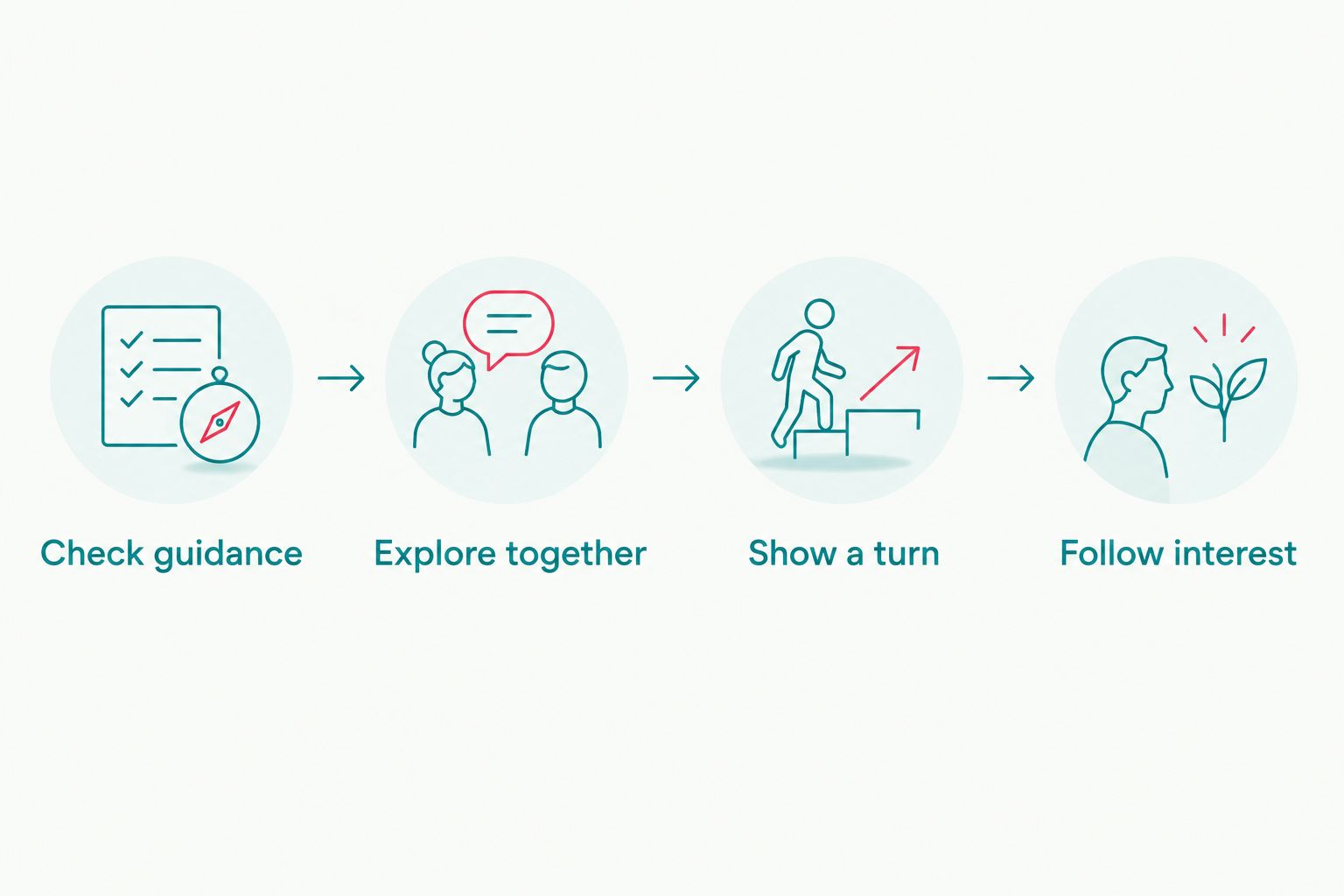
Use this sequence to separate checking suitability, exploring and learning the game:
- Check guidance: read the age recommendation, warnings and supplied instructions before play.
- Explore together: introduce the pieces under supervision without expecting your child to know the rules.
- Show a turn: demonstrate the action described in the instructions, then invite your child to try.
- Follow interest: pause when your child has had enough rather than insisting on a finished round.
Keep a guided introduction distinct from the official game. You can spend time getting familiar with pieces, then return to the supplied rules when you are ready to play; there is no need to describe your own warm-up as an official variant.
The same approach applies whichever theme you choose. You are inviting your child into a shared activity, not checking whether they can perform every part immediately.
Two starting points to compare
If your decision is between a general cooperative introduction and a construction-themed matching game, compare these two starting points. Choose First Orchard for its chunky wooden pieces and cooperative focus, or Building Site for cooperative matching and memory with Bruno Bear's team.


How these HABA first games are ranked
This 2026 ranking prioritises a clear first-game purpose, then separates the choices by play style, handling, stated duration, player count and theme. First Orchard leads because its description explicitly combines a toddler introduction, cooperative gameplay and easy-to-grasp wooden pieces.
The remaining positions are different recommendations, not claims that one game is universally better. Hanna Honeybee serves short cooperative sessions; Building Site serves construction-led matching and memory; Animal Upon Animal Junior serves stacking.
Listed durations describe the products, not a promise about your child's attention span. Follow the age guidance and instructions for the exact game you choose, regardless of its position here.
Which HABA first game should you choose?
Choose My Very First Games - First Orchard if you are undecided. It is the default recommendation for a parent seeking a cooperative introduction with chunky wooden pieces.
For a more specific preference, use the activity to decide:
- Short cooperative play: choose My Very First Games - Hanna Honeybee.
- Construction, matching and memory: choose My Very First Games - Building Site.
- Placing and balancing animals: choose My Very First Games - Animal Upon Animal Junior.
Your 2026 shortlist does not need to become a collection. Choose the game that matches your child's current interest, enjoy it together and let that experience inform what you choose next.
FAQ
What's the best HABA first game for a toddler?
My Very First Games - First Orchard is the best overall choice in this guide for a cooperative introduction. Its description specifically highlights toddlers and chunky wooden pieces that are easy to grasp. Check the individual product's age guidance before choosing.
Is First Orchard better than Hanna Honeybee?
First Orchard is the default for a cooperative beginning; Hanna Honeybee is the more specific choice when a listed short duration matters. Hanna Honeybee lists 1–4 players and 5–10 minutes, while First Orchard's description highlights graspable wooden pieces.
Which HABA first game has the shortest listed playing time here?
My Very First Games - Building Site has the shortest stated playing time in this shortlist, at 5 minutes. It combines cooperative matching and memory for 1–4 players.
Which HABA first game should I choose for a child who loves stacking?
Choose My Very First Games - Animal Upon Animal Junior for animal-tower stacking. Its listed playing time is 10 minutes for 1–4 players. Check that the individual game's age guidance suits your child.
Can I choose a HABA first game for one listed player?
Hanna Honeybee, Building Site and Animal Upon Animal Junior each list a player range of 1–4. A single-player listing does not mean a toddler should play unsupervised; follow the product guidance and instructions.
Are all My Very First Games suitable for the same age?
Choose by each game's individual age recommendation rather than assuming the series name gives every box the same suitability. Check warnings and instructions for the exact product before play.
What should I do if my toddler only wants to explore the pieces?
Offer supervised time to become familiar with the pieces before introducing a round. Keep this exploration separate from the official rules, then demonstrate the game when your child is interested.
One last thing
A listed player count is not an instruction to fill every place. Hanna Honeybee, Building Site and Animal Upon Animal Junior each list 1–4 players, so you do not need a full group before considering them.
For a first introduction, give yourself room to explain and respond rather than making the occasion bigger than it needs to be. Your best next move is to choose the activity your child already enjoys, check its guidance and share that first little discovery together. Habauk's shortlist starts there—not with collecting every box.