


Best wooden train sets for toddlers: loop wins in 2026
Best overall: a simple-loop wooden train starter set. Best for children who enjoy rebuilding: a modular track set. Best for letter play: an alphabet train. These are the best wooden train sets for toddlers to compare in 2026, but the right pick depends on whether your child wants to push a train, build its route or invent the world around it.
- The best wooden train sets for toddlers start with a simple loop that is easy to rebuild.
- Choose a modular track set for route-building, an alphabet train for letter play, or scenery for storytelling.
- Check the maker’s age guidance, loose parts and track compatibility before buying any wooden train set.
- Habauk sells HABA wooden toys, but the supplied product selection does not establish a wooden train set to recommend.
Why this matters
A toddler can enjoy sending a train around the same loop again and again. That does not mean the most elaborate box is the best starting point. If assembling the track takes over playtime, a simpler layout gives your child more chances to take it apart, put it back together and make the journey their own.
Choose the play your child wants to repeat, not the set with the busiest picture on the box. If you are buying for a particular age, the guide to wooden train sets for 2-year-olds is a useful next read. In 2026, the questions remain practical: Can your child use the pieces safely? Can they make a satisfying route? Will the set fit where you plan to play?
What makes the best wooden train set for a toddler?
Use these checks before comparing themes or accessories:
- Age guidance: Read the age label on the exact set, including its train, track and accessories. A toddler-friendly theme does not make every loose piece suitable for your child.
- An easy first route: Look for a layout your child can understand and help rebuild. A loop provides a clear starting point: the train leaves, travels around and comes back.
- Manageable connections: Consider whether your child can join track pieces with your help. If every connection interrupts play, save a more intricate set for later.
- Useful pieces: Straight track, curves and a train matter more at the start than a collection of buildings. Check what the box contains rather than assuming pictured scenery is included.
- Room to play and put away: Picture the assembled track on your floor or table. A set that suits your space is easier to bring out regularly.
- Expansion plans: If you hope to add track later, verify compatibility with the exact sets you are considering. Do not assume every wooden railway system connects neatly.
There is no universal winning piece count. The best set is one your toddler can enjoy now, with enough variety to invite another journey tomorrow.
Wooden train set types at a glance
| Rank | Set type | Best for | Standout feature | Key limitation |
|---|---|---|---|---|
| 1 | Simple-loop starter set | A first track layout | A route with a clear beginning and return | Limited route changes |
| 2 | Modular track set | Children who like rebuilding | Multiple possible layouts | More pieces to organise |
| 3 | Alphabet train set | Children drawn to letters and names | Letter-based pretend play | A train may not include track |
| 4 | Train-and-scenery set | Story-led play | Places for passengers or cargo to visit | Scenery can crowd out basic track |
The table ranks types of set, not tested products. Habauk is a UK store for HABA wooden toys, games and baby toys; the supplied product selection does not identify a wooden train set available to recommend by name. Check the contents and age guidance of any specific set before you buy.
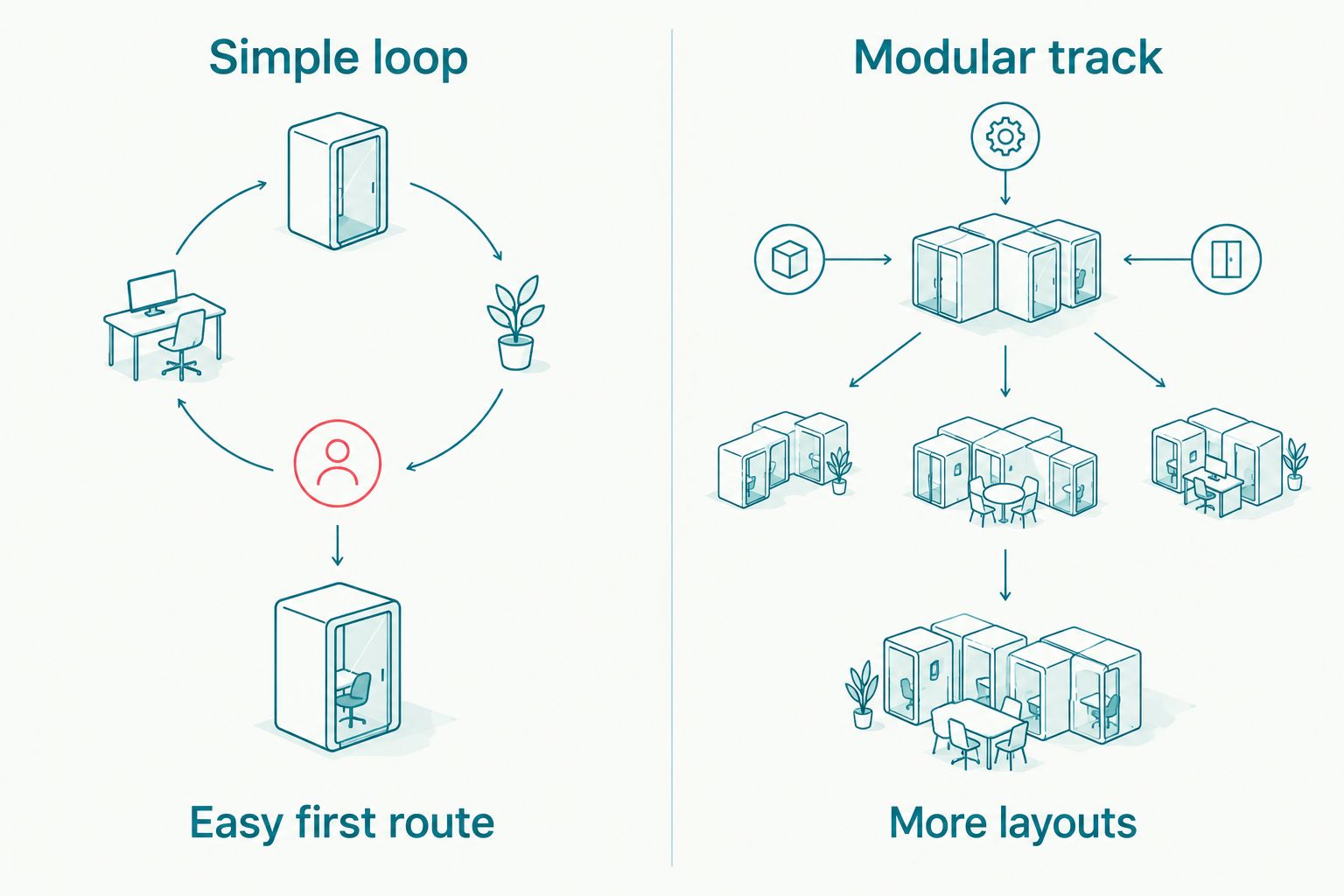
1. Simple-loop starter set: best wooden train set for a first route
A simple-loop starter set puts the journey first. Your child can push the train away, follow it around the track and watch it return without needing a complicated layout. It is the best default for a toddler who is new to wooden railways because the idea is immediately clear.
That simplicity helps you join the game without taking it over. You can ask where the train is going, make room for a passenger or let your child decide when the next trip begins. After play, the same small collection of track is easier to sort than a layout built from many different sections.
Simple-loop starter set pros:
- Offers an easy-to-follow route for first train play.
- Gives your child a layout to help rebuild.
- Leaves space around the track for pretend-play stops.
Simple-loop starter set cons:
- Offers fewer route changes than a larger track collection.
- Can feel repetitive if your child mainly enjoys designing layouts.
Best for: A toddler who wants to push a train and see where it goes. Verdict: Buy a simple-loop set first if you do not yet know which part of railway play your child likes most.
2. Modular track set: best for little route builders
A modular track set puts more attention on what happens before the train moves. Your child can try a different bend, extend a line or rearrange the route with you. Pick this type when building the railway is already as interesting to them as driving the train.
Look closely at the included pieces. A photograph of a sweeping layout tells you less than the contents list: find out whether the train is included and whether the supplied track makes a satisfying route on its own. Check compatibility before planning to combine it with track you already have.
Modular track set pros:
- Encourages your child to change the route between games.
- Gives you openings to solve small layout problems together.
- Can suit a child whose interest has moved beyond one loop.
Modular track set cons:
- Takes more sorting and assembly than a starter loop.
- Extra track is not useful if the child wants to start pushing a train immediately.
- Compatibility needs checking before you combine sets.
Best for: A toddler who asks to move the track, not just the train. Verdict: Buy when rebuilding is already part of the game; otherwise, start smaller.
3. Alphabet train set: best for letter-led pretend play
An alphabet train brings letters into vehicle play. A child can choose a letter, arrange a name or give each carriage a place in a story. It earns a spot here as a distinct option, not as a substitute for a track set.
The word train can describe a linked letter toy rather than a railway. Check the box if your child is expecting rails: does it include track, or is the train designed to play without it? If the answer is unclear, treat it as a letter toy until the contents confirm otherwise.
Alphabet train set pros:
- Gives letter recognition a playful setting.
- Works for naming games led by your child.
- Can join a wider pretend-play scene if its design suits that use.
Alphabet train set cons:
- May contain no track at all.
- May not satisfy a child asking to build a railway.
- Individual letters or fittings require the same age-label check as other parts.
Best for: A child who enjoys letters as much as vehicles. Verdict: Hold until you have confirmed the exact contents; buy it for letter play, not on the assumption that it is a railway set.
4. Train-and-scenery set: best for storytelling
A train-and-scenery set gives the journey destinations. A station, building or landscape piece can become somewhere to stop, collect passengers or make up a story. It suits a child who already turns toys into places and characters.
Scenery should add to the railway rather than replace it. Before choosing a themed box, check the balance of train, track and accessories. An inviting scene is less useful as a first railway if it does not give your toddler enough track to make the journey they imagined.
Train-and-scenery set pros:
- Offers prompts for stories beyond pushing a train around.
- Helps you join in with destinations and characters.
- Gives an existing railway another way to be played with.
Train-and-scenery set cons:
- Accessories add pieces to manage and put away.
- A themed set can have less basic track than its packaging suggests.
- Each accessory needs its own suitability check.
Best for: A toddler who invents journeys and asks what happens at each stop. Verdict: Hold for a first purchase unless the included track makes a useful route; buy scenery once the basic railway is covered.
How these picks were ranked
The 2026 ranking puts independent toddler play ahead of the number of accessories. A first set needs a clear route, suitable pieces and a manageable setup. Modular track comes next because it adds ways to rebuild; alphabet and scenery sets serve narrower interests and demand a closer look at what is actually included.
These are recommendations by format, not claims about named products or hands-on testing. Check the exact set’s contents and manufacturer age guidance before making the final choice. A train shown beside a bridge or a letter wagon shown near a track does not establish that those pieces come in the box.
Make the first railway inviting
You do not need to build every section before inviting your toddler over. Start with the route the set can make most easily, put the train beside it and let your child decide what happens next. If they want to push the train off the track or place a block beside a stop, follow their idea instead of correcting the story.
A few familiar objects can give a journey meaning without another railway purchase. A block can become a destination; a soft toy can wait for the train. Keep any added object suitable for your child’s age, and move fragile or unsuitable pieces out of reach rather than treating the play area as a display.
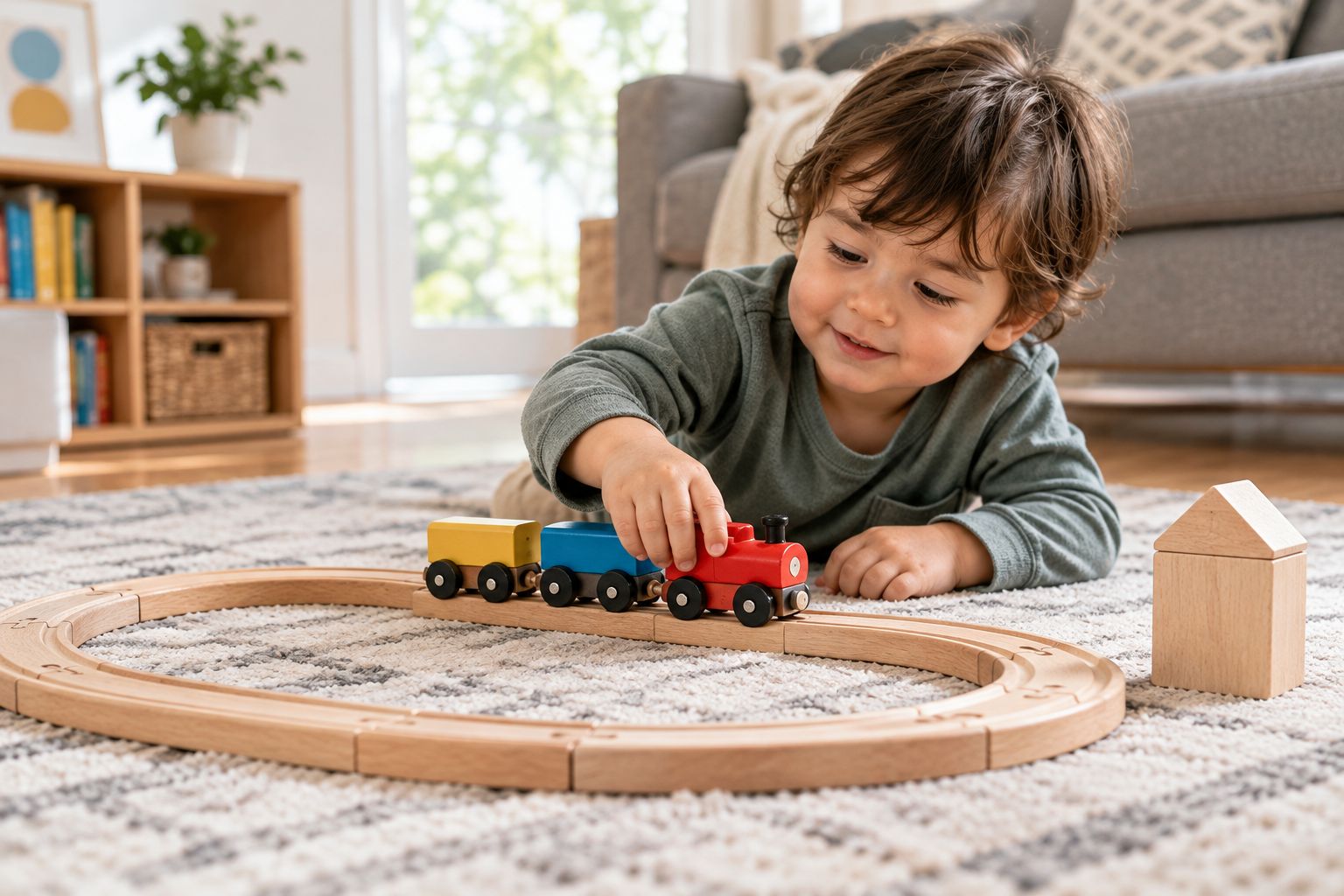
If your child immediately pulls the route apart to make a new one, remember that for your next choice. If they keep the loop intact and invent passengers instead, extra track need not be the priority. The railway can grow around the play you actually see.
Habauk sells HABA wooden toys, including building blocks that can take part in make-believe scenes, but blocks are not a train set. Keep that distinction clear when shopping: choose the railway for its train and track, then decide whether your child wants other toys alongside it.
Which wooden train set should you choose?
Choose a simple-loop wooden train starter set if you are undecided. It gives a toddler a railway to use before you know whether they will prefer route-building, letters or elaborate stories. That makes it the clearest answer to the best wooden train sets for toddlers in 2026.
Choose modular track instead when your child already enjoys changing layouts. Choose an alphabet train for a child interested in letters, but confirm whether it includes rails. Choose a scenery-led set when destinations are central to their play, and make sure there is enough track for the journey. Whatever wins, read the exact age label and contents list first.
FAQ
What is the best wooden train set for a toddler in 2026?
A simple-loop wooden train starter set is the best first choice for a toddler in 2026. It offers a clear route without making a complicated layout the starting point for play.
Is a simple train loop better than a large track set?
A simple loop is better for a first railway when your child mainly wants to push a train. Choose a larger modular set if rebuilding routes is already part of the fun.
Are all wooden train sets suitable for toddlers?
No. Check the manufacturer’s age guidance for the exact set and inspect its loose parts and accessories before giving it to your child.
Do alphabet trains come with wooden track?
Not necessarily. An alphabet train can be a letter toy without rails, so check the stated box contents before buying it as a railway.
Can wooden train tracks from different sets be joined?
Do not assume they can. Confirm compatibility for the exact sets you want to combine before choosing an expansion.
What should a first wooden train set include?
Look for a train and enough track to make a usable route. Check the contents list rather than relying on accessories pictured in a play scene.
Does Habauk have a wooden train set recommended in this guide?
No named Habauk wooden train set is recommended here because the supplied product selection does not identify one. Habauk sells HABA wooden toys, but those toys should not be presented as trains.
One last thing
Before buying a bigger railway in 2026, notice what your child does with a simple route. The part they repeat is the feature to look for next: pushing calls for an easy track, rebuilding calls for more route options, and storytelling calls for places to visit. That observation is more useful than choosing by box size alone.