


How long do wooden toys last? No fixed lifespan | 2026
Wooden toys have no fixed lifespan: a toy can stay in play for years if it remains intact, clean and suitable for the child using it. In 2026, the useful question is not how old the toy is, but whether its surface, parts and play value still hold up. This guide shows you what to check, when to put a toy away and when to retire it.
- How long do wooden toys last? There is no fixed lifespan; condition matters more than age.
- Keep a wooden toy in play only while its parts are secure and its surfaces are safe to handle.
- Habauk wooden toys are best for families who will check condition and age suitability before passing them on.
- Store toys dry, keep sets together and retire damaged pieces rather than guessing they are safe.
How long do wooden toys last?
There is no reliable number of years that applies to every wooden toy. A solid block, a puzzle with loose pieces and a wooden toy with moving parts face different kinds of wear. Before passing any of them to another child, check the individual toy rather than assuming that wood alone makes it safe to keep.
A toy can also reach the end of its useful life before the wood wears out. A child who has moved on from grasping toys might still enjoy building blocks; a once-loved puzzle might sit untouched because a piece is missing. If you are deciding whether to keep or pass on a toy, separate those questions: Is it safe to use, and will someone use it? For a closer look at the material question, read whether wooden toys are safer than plastic toys for toddlers.
| Type of toy | What to check first | When to stop using it |
|---|---|---|
| Wooden building blocks | Edges, cracks and rough patches | A block has a sharp edge, splinter or serious crack |
| Wooden puzzles | Piece edges and whether the set is complete | A piece is damaged or no longer suitable for the child's age |
| Wooden grasping or teething toys | Surfaces and any parts joined to the wood | A part loosens, the surface splinters or the toy cannot be cleaned appropriately |
| Wooden toys with moving parts | Connections and whether parts still work as intended | A part detaches, jams or creates a sharp edge |
The table is a condition check, not a lifespan chart. A well-kept toy can stay playable after its first owner outgrows it; a newer toy with damage should leave play immediately. For baby toys, treat a small change in condition seriously because the toy is handled and mouthed closely.
Why this matters
Wooden toys often become part of family routines: the blocks that come out on rainy mornings, the puzzle a grandparent keeps ready, or the grasping toy waiting for a younger sibling. Keeping them makes sense only while they remain right for the child who plays with them now. A toy's history is a lovely reason to inspect it carefully, not a reason to overlook damage.
In 2026, the best answer to a hand-me-down question is a fresh inspection. You do not need to know when a toy was bought to spot a loose part or a rough edge. You do need to know whether the child receiving it can use it appropriately. Age suitability does not transfer automatically with ownership.
Why a wooden toy's lifespan varies
The same care routine will not suit every toy. Look at how a child uses it, how it is put together and where it spends its time between games.
- Construction: A plain block has fewer connections to inspect than a toy with attached or moving parts. Check every joint and fitting rather than judging the toy by its wooden body alone.
- Surface wear: Painted or finished areas, corners and edges take the knocks of everyday play. A change in colour is not the same as a splinter; run your eyes and fingers over the surface to tell the difference.
- Moisture: Wood should not be left damp. Follow the toy's care instructions and let it dry fully before storing it or handing it back for play.
- Missing pieces: A set can be physically sound but less useful when key pieces disappear. Check completeness before promising it to another family.
- The next child's age: A toy that suited an older child is not automatically suitable for a baby or toddler. Check its stated age guidance and current condition together.
- Intensity of play: A toy used, dropped and carried around each day needs closer attention than one kept aside for occasional play. Inspect the places a child grips or connects most often.
These factors do not add up to a countdown. They tell you where to look. If a toy fails a safety check, its age and sentimental value do not change the decision.
How can you tell whether a wooden toy is still usable?
Give the toy a calm, hands-on check before it goes back into the basket. This is especially useful when you take toys out of storage, receive a hand-me-down or swap toys between siblings.
- Look over the whole surface. Check faces, corners, holes and edges for splits, splinters or peeling material. Do not hand over a toy with an edge that catches your finger.
- Check every attached part. Gently examine fittings and moving sections. If a part is loose or comes away, stop using the toy.
- Count the pieces that matter. Compare the set with its packaging or product information if you have it. Put aside any incomplete set that no longer works as intended.
- Check cleanliness and dryness. Use the manufacturer's care guidance for that toy. Allow it to dry before storage; do not assume that soaking is suitable for wood or attached materials.
- Check the intended user. Read the toy's age guidance again, even if an older sibling played with it safely. The next child has different abilities and habits.
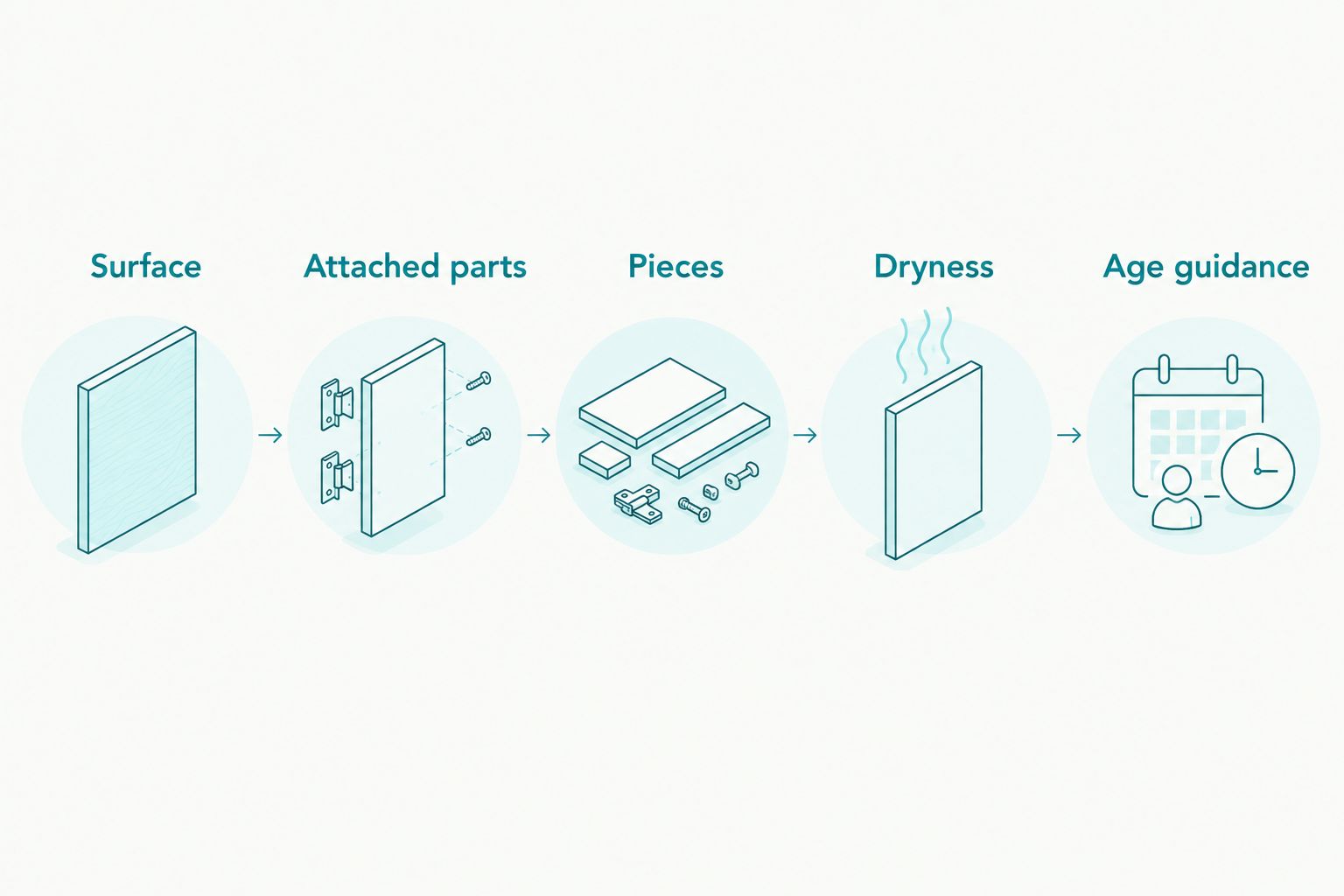
Retire a toy with a splinter, sharp break or loose part instead of leaving it in the play basket. Set it aside where a child cannot pick it up while you decide whether the manufacturer offers appropriate care or replacement guidance. If you cannot establish that it is safe to use again, do not pass it on.
Does the type of wooden toy change what you check?
Yes. Think about the way the toy is used rather than treating every wooden object alike. A stack of blocks invites repeated building and tumbling; a grasping toy is held close and needs particular attention to its surface. Both can be enjoyable for more than one child, but neither gets a pass on inspection.
For wooden blocks, check the pieces children handle most, including corners and edges. Keeping a set together also makes it easier to see whether a piece has gone missing. Habauk wooden toys include building sets such as the Basic Building Blocks 102 Piece Extra Large Wooden Starter Set and the Colored Wooden Building Blocks - 85 Piece Set. Their piece counts describe the sets; they do not predict how long either set will last.
For a wooden grasping or teething toy, inspect the surface and any joined parts before use. The Color Drops Wooden Grasping and Teething Toy is described for babies from 6 months; that age information does not replace a condition check. A toy used for mouthing deserves a closer look each time it comes back out of storage.
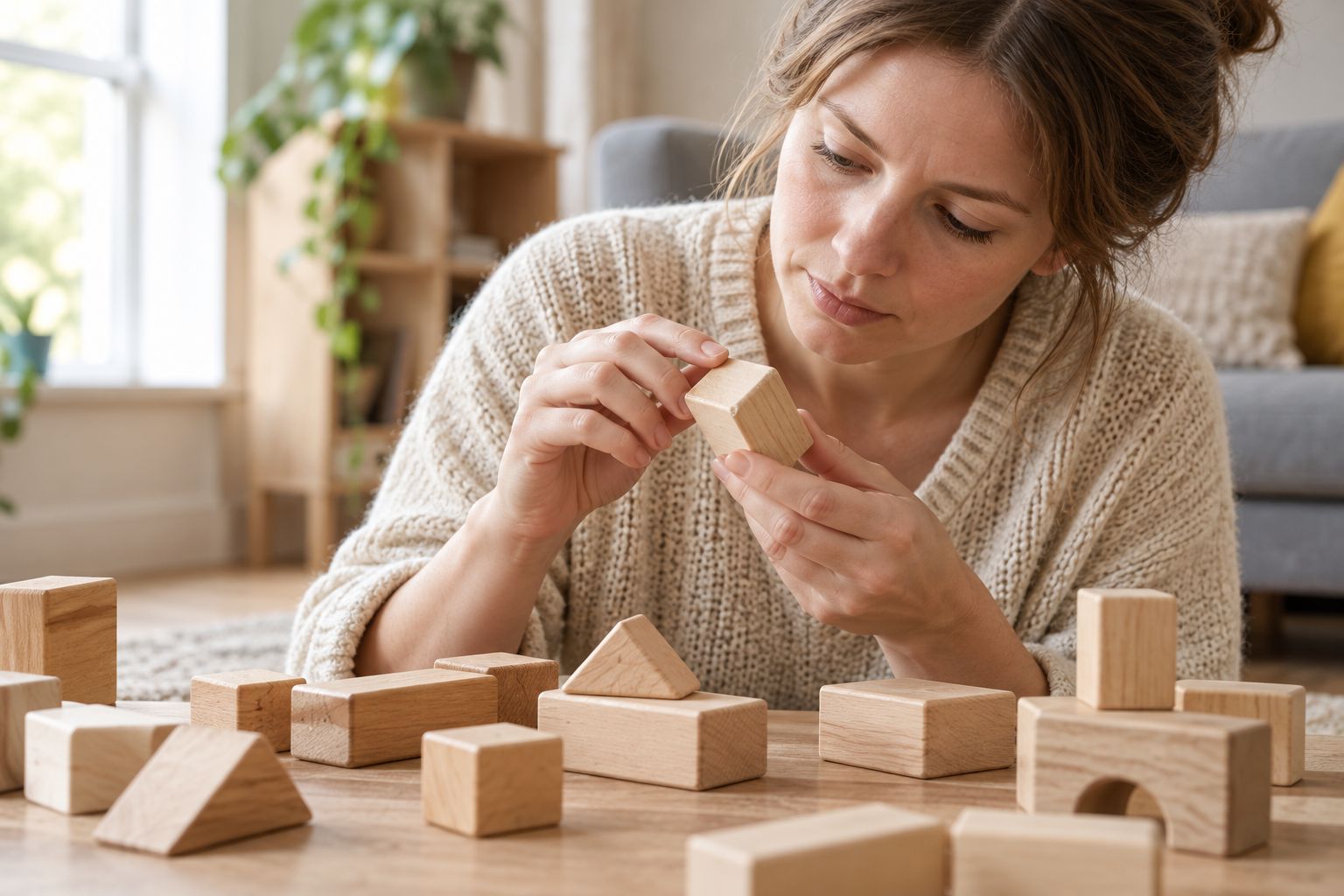
If you are choosing a toy with future hand-me-down use in mind, pick the play pattern your family will return to, then check the product's age guidance and care information. A larger piece count gives you more pieces to keep track of, not a longer guaranteed life.


What helps wooden toys stay in play longer?
A simple habit beats a complicated care routine: check the toy, clean it as its maker directs and put it away dry. Do this after messy play and before a toy goes into longer-term storage. In 2026, make the check part of handing toys down too, even if they looked fine when you packed them away.
Keep loose pieces together so you can inspect the full set next time. A container helps you notice a missing puzzle piece or block before the toy moves to another home. If you cannot find a toy's care information, avoid an aggressive cleaning method rather than assuming every wooden finish or attached material responds the same way.
Storage matters most when toys will be out of sight for a while. Choose a dry place and check the toy again when you bring it out. Putting a damp toy away is not the same as preserving it. Let it dry thoroughly first, then look for any change in the wood, finish or connections before a child plays with it.
A toy rotation can also tell you whether the toy still earns its space. If a child returns to the same blocks in new ways, keep them accessible while they remain suitable. If a toy goes untouched, set it aside for a suitable recipient rather than keeping it in the basket out of habit. Never use a toy's lack of visible wear as your only reason to pass it to a younger child.
Can wooden toys be handed down to another child?
Yes, if each toy is intact, clean and appropriate for the receiving child. Passing it on is a new decision, not an extension of the first child's permission to use it. Check the age guidance, all parts and the condition of the surface immediately before the handover.
Tell the next family if a set is incomplete or if you no longer have its instructions. That lets them decide whether it suits their child. A puzzle missing a piece can be frustrating; an item with a loose component is a safety concern. Do not treat those as the same problem.
For babies, be particularly selective. A toy passed down from an older child still needs to meet the baby's current stage and withstand close handling. If you cannot confirm how a toy should be cleaned or whether its attached parts are secure, set it aside rather than handing it over with an explanation that it was fine before.
Should you repair a damaged wooden toy or retire it?
Retire a toy from play immediately when it has a sharp break, splinter or loose part. Do not assume a household repair makes a toy suitable for a child, especially one likely to put it in their mouth. Check the manufacturer's instructions before attempting any repair, and do not return the toy to play unless you can establish that it is safe.
A cosmetic mark is a different question. You can inspect a scuff and keep using a toy if its surface remains sound, its parts remain secure and its age guidance still fits. When you cannot tell whether the damage is merely cosmetic, choose the safer option and keep it out of play.
FAQ
How long do wooden toys last in 2026?
Wooden toys have no fixed lifespan in 2026. Keep an individual toy in play while it remains intact, clean and suitable for the child using it.
Can wooden toys last for more than one child?
Yes, a wooden toy can be handed down if it passes a fresh condition check and suits the next child's age. Inspect the surface, parts and completeness before passing it on.
Do wooden blocks last longer than wooden puzzles?
There is no fixed lifespan comparison for wooden blocks and wooden puzzles. Blocks need checks for damaged edges; puzzles also need checks for missing or damaged pieces.
Should I throw away a splintered wooden toy?
Take a splintered wooden toy out of play immediately. Check the manufacturer's guidance, and do not give it back to a child unless you can establish that it is safe.
Can I pass a wooden teething toy to another baby?
Pass on a wooden teething toy only if it remains intact, can be cleaned according to its care guidance and is suitable for the next baby. Check its surface and any joined parts closely.
How should I store wooden toys between children?
Store wooden toys clean and fully dry, with set pieces kept together. Inspect each toy again when you take it out for another child.
One last thing
In 2026, the oldest toy in the box is not necessarily the first one you should retire. A sound block that a child still enjoys has a different future from a newer toy with a loose part. Let condition, age suitability and actual play decide what stays.