


Wooden Toys for Bedtime Routine: 2026 Picks & Verdict
Wooden toys for a bedtime routine are quiet, screen-free pieces you bring out in the last 20-30 minutes before sleep, swapping bright lights and loud sound effects for something calm a child can hold, turn over and explore with their hands.
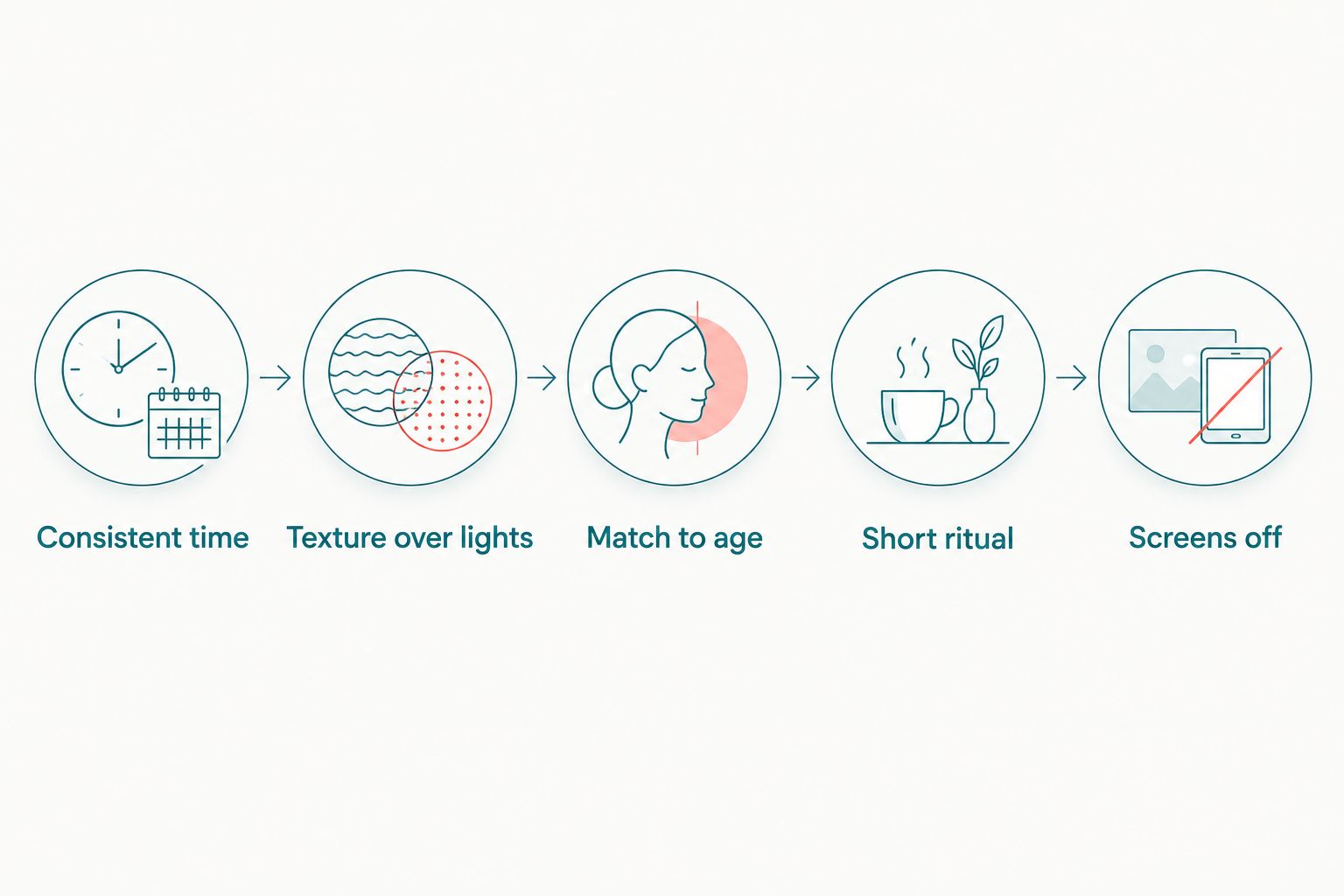
- Wooden toys for a bedtime routine work best when they're texture-first, not light-and-sound-first — pick grasping toys, soft stacking games or gentle wooden eggs over anything with flashing lights.
- Start the same 20-30 minute window every night; a single teether or stacking toy signals 'wind down' faster once the pattern is set.
- Newborns do best with one grasping toy; toddlers do better with a short 3-5 piece stacking or sorting ritual.
- Cutting screens before the toy basket comes out matters as much in 2026 as the toy you pick — blue light delays wind-down, the toy alone doesn't undo it.
- Skip anything with battery lights or loud chimes after dinner and save those for daytime play.
Why wooden toys matter for a bedtime routine
Bedtime asks for the opposite of what daytime play wants. A child who's spent the day building, running and figuring things out needs the last 20 minutes to come down, not ramp back up.
That's the real difference between choosing wooden toys for bedtime routine and picking toys for anywhere else in the day: the criteria flip completely. A marble run that's brilliant at 4pm is the wrong pick at 7:30pm because it invites speed and noise, not calm.
A simple grasping toy like the Teether Cuddly Rainbow Round from Habauk works at bedtime precisely because it does one thing: it gives small hands something soft and repetitive to hold, with nothing to chase, win or figure out.
Build the routine step by step
Set a consistent start time every night
- Pick one fixed window, ideally the same 20-30 minutes every evening
- Use the same room and the same low lamp, not the main light
- Keep the toy selection to one or two pieces, not the full toy box
- Hold the line on late nights — shorten the window, don't skip it
Choose texture over lights and sound
Most toys marketed for babies and toddlers compete for attention with flashing lights or loud chimes. That's the wrong instinct for the last half hour before sleep. A soft rattle like the Fun with Sounds Wooden Eggs sits right at the edge that works — quiet enough not to excite, textured enough to hold attention without asking anything back.
- Skip anything with battery-powered lights or a "press for music" button
- Favor smooth, sanded wood grain a child can run fingers over
- One soft chime or rattle is fine; a jingling multi-tone toy is not
- Fabric-wrapped or rounded wooden pieces beat sharp-edged blocks for a sleepy grip
Match the toy to age and stage
Habauk's wooden toys are grouped by age on the site, which makes matching a stage to a bedtime toy faster than browsing by type alone.
- Newborns (0-6 months): one grasping or teething toy, nothing more
- Babies (6-18 months): simple stacking rings or nesting cups, 3-4 pieces
- Toddlers (18 months-3 years): a short sorting or matching set, 3-5 pieces
- Preschoolers (3+ years): a quiet two-sided puzzle or a single stacking game
Build a short, repeatable ritual
The ritual matters more than the toy itself. Three steps, in the same order, every single night, teaches a child's body that sleep comes next — long before the story or the lights go off.
- Same toy first, every night, for at least a few weeks before rotating
- Narrate softly rather than actively play — describe colours and shapes, don't build a story
- End by putting the toy back in its spot together, which signals "that part is done"
Keep the bedtime basket within easy reach
- Store 2-3 bedtime-only toys in a small basket near the bed, not mixed into the main toy box
- Rotate one piece in or out every few weeks, never all at once
- Never introduce a brand-new toy right at bedtime — novelty excites, it doesn't calm
- Keep the basket visible so choosing a toy doesn't become its own decision at 7pm
Ease off screens before the basket comes out
Wooden toys are only half of a calming bedtime routine. Screens work against everything a wooden teether or stacking game is trying to do: blue light delays melatonin release, and video content keeps a child's brain in "seek more" mode long after the tablet is switched off.
Cutting evening screen time before the toy basket appears is the other half of the routine that actually gets a child settled, and parents building a screen-free wind-down alongside toy time often look at reducing evening screen time as the missing half of the same 20-30 minute window.
For families building screen-free habits beyond bedtime, wooden toys for screen-free play at home covers the daytime side of the same approach.
- Dim household lights 30 minutes before the toy basket comes out
- Move phones and tablets out of the bedroom entirely, not just out of reach
- Turn the TV off rather than muted — sound carries even at low volume
- Keep the clock time for "screens off" identical to the clock time for "toy basket out"
These calming wooden toys work well as a rotating bedtime basket in 2026:


Comparing bedtime toy options
| Toy type | Best for | Key limitation |
|---|---|---|
| Wooden grasping or teething toy | Newborns 0-6 months | Loses its pull once the grasping reflex fades around 6 months |
| Wooden stacking or sorting set | Toddlers 1-3 years | Too simple to hold a preschooler's attention |
| Soft-sound wooden toy (rattle or chime) | Toddlers easing off noisy daytime toys | Volume has to stay low or it re-stimulates instead of calming |
| Two-sided wooden puzzle | Preschoolers 3 years and up | Small pieces need supervision this close to sleep |
Common mistakes parents make with bedtime wooden toys
- Introducing a brand-new toy right at bedtime — novelty excites rather than calms; save first-time toys for daytime.
- Picking anything with battery lights or a sound button for the evening basket instead of daytime play.
- Letting the wind-down window stretch past 30 minutes instead of holding a consistent length.
- Mixing bedtime toys into the main toy box, so choosing one becomes its own decision at 7pm.
- Skipping the toy basket on weekends "because there's no rush" — this breaks the pattern a child relies on.
FAQ
What are the best wooden toys for a bedtime routine in 2026?
A single grasping or teething toy for babies, and a 3-5 piece stacking or sorting set for toddlers, are the safest bedtime picks in 2026. Anything with battery lights or loud sound effects belongs in daytime play, not the last 20 minutes before sleep.
Is a teething toy okay to use right before sleep?
Yes, a plain wooden teething toy is one of the calmest options for the bedtime window because it gives a baby something repetitive to hold without demanding attention. Keep it to the same one or two pieces each night rather than swapping it out.
How long should bedtime toy play last?
Keep the wind-down window to 20-30 minutes, the same length every night. Longer sessions risk tipping back into active play instead of calm.
Should musical wooden toys be part of a bedtime routine?
Only if the sound is a soft chime or rattle rather than a jingling multi-tone toy. A single quiet sound, like a wooden egg's rattle, can stay in the routine; anything louder should move to daytime play.
What age can a child start a bedtime toy ritual?
Newborns from a few weeks old can start with a single grasping toy at bedtime. The ritual becomes more structured — a short stacking or sorting sequence — from around 18 months.
Are wooden toys better than plastic ones for a sleepy toddler?
Wooden toys generally carry less battery-powered light and sound than plastic equivalents, which is the main reason they suit a calming bedtime routine better. The material matters less than whether the toy lights up or plays music.
How do I stop bedtime toy time from turning into a wake-up party?
Hold the toy selection to one or two pieces stored in a small basket, and never introduce a brand-new toy right at bedtime. Novelty excites a child rather than settling them, so save new toys for the daytime.
Can twins or siblings share the same bedtime toy routine?
Yes, as long as each child has their own toy from the basket rather than negotiating over one piece at the exact moment they should be winding down. Two teething toys or two small stacking sets work better than one shared item.
One last thing
The toy matters less than what happens right before it. Keep the same 2-3 pieces in the bedtime basket for a few weeks before swapping anything in or out — the predictability of seeing the same toy, in the same spot, at the same time, is what tells a child's body it's time to slow down. Change the toy every single night and you've built a new source of stimulation instead of a wind-down cue, which defeats the point of choosing wooden toys for a bedtime routine in the first place.