


Wooden Toys Cause and Effect: 2026 Age-by-Stage Guide
Cause and effect play teaches a baby that their own action makes something happen: a shake produces a rattle, a push sends a wooden ball rolling, a peg drops through a hole with a clunk. This guide sorts wooden toys for cause and effect learning by what a baby can physically do at each stage, not just by age on a box.
- Wooden toys cause and effect play works best when feedback matches grip strength, not just age, in 2026.
- Fun with Sounds Discovery Blocks and Musical Eggs suit babies 6-18 months still mastering shake-and-listen play.
- Marble Run Starter Set suits toddlers from around 18 months who can already push a ball and track its path.
- Shape sorters need pincer grip, not curiosity - introduce them once small pieces are handled reliably.
Why wooden toys for cause and effect learning matters for babies aged 6 to 18 months
A baby who presses a Fun with Sounds Discovery Blocks set and hears a bell, then does it again on purpose, has just linked action to outcome - the foundation for problem-solving, language, and later cause-based reasoning. Wooden toys suit this stage because the feedback is immediate and mechanical: a shake makes a sound now, not after a battery or a screen delay.
Parents shopping in 2026 are increasingly steering away from screen-based "smart" toys precisely because the feedback loop is too indirect for a baby who is still learning that they caused anything at all. A wooden toy that rattles, clunks, or rolls the instant it's touched keeps the lesson simple: I did that.
The stages: matching wooden toys to what a baby can actually do
Cause and effect skill develops in a fairly predictable order, tied to motor development rather than calendar age. Buying ahead of that order usually means a frustrated baby and an ignored toy.
1. Start with grasp-and-react toys before anything mechanical
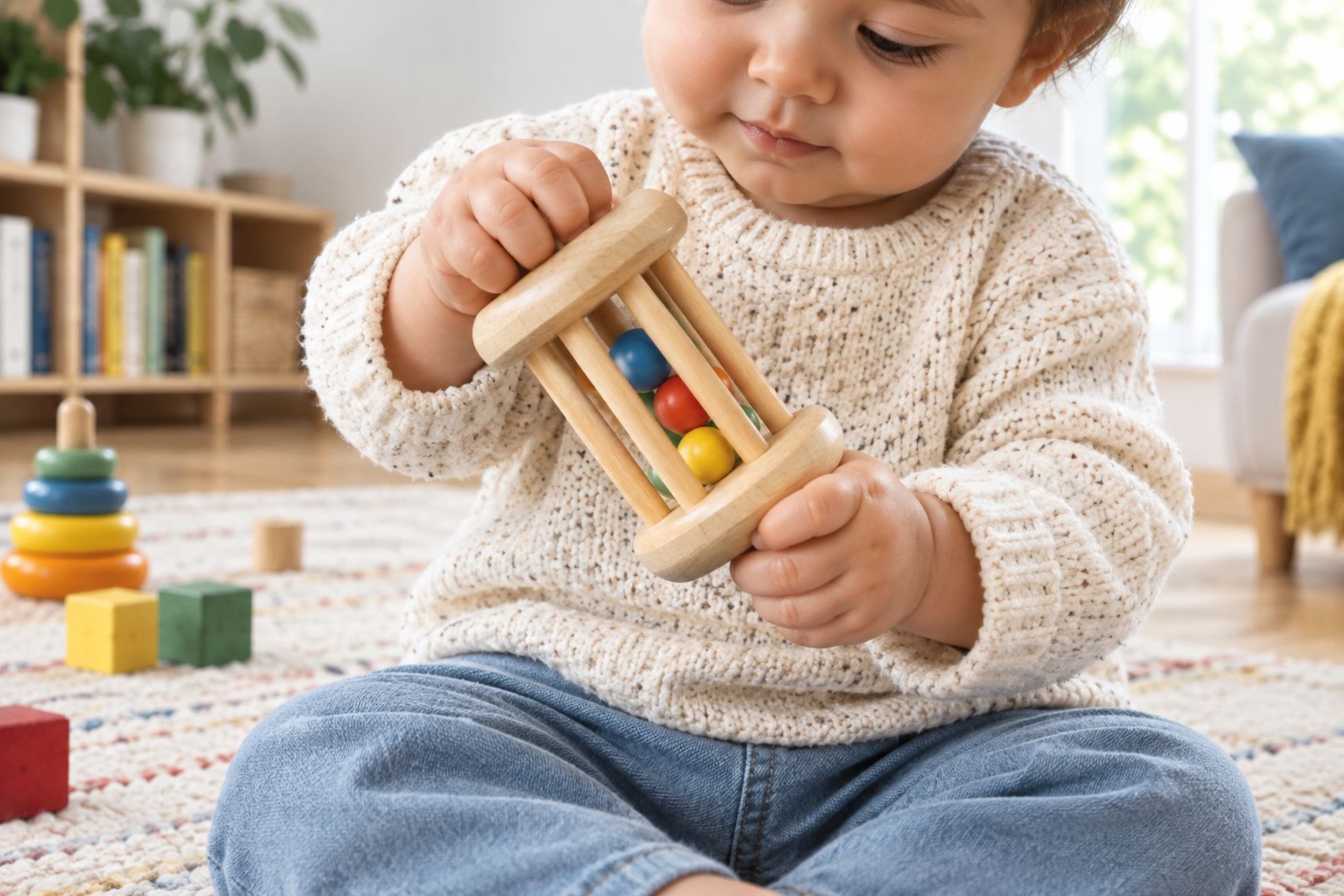
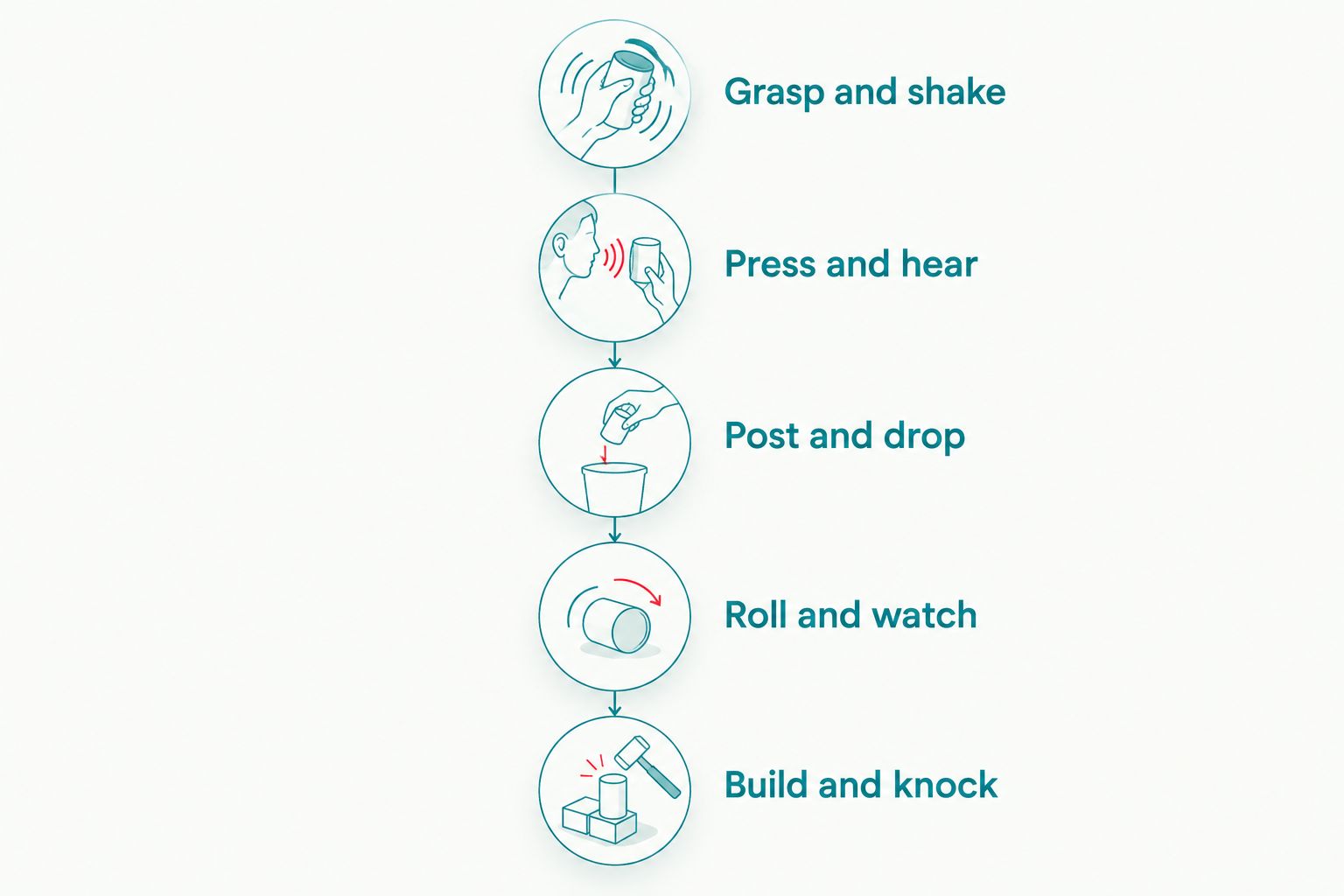
Before 6-9 months, most babies can grip and shake but can't yet press a button or post a shape. The toy needs to react to a simple whole-hand motion.
- Pick a rattle or teether that moves or sounds with any shake, not a precise motion
- Favour rounded wooden shapes a baby can hold with a fist, not fingertips
- Avoid anything that needs two hands working together at this stage
- Offer one toy at a time so the cause-effect link stays obvious
2. Add sound as the reward, not the toy
Once a baby can sit unsupported, usually 6-9 months, sound-reactive wooden toys become the next step - the goal is still "I moved it, it made noise", just with more variety.
- Choose sets with more than one sound so repetition doesn't get boring in a week
- Look for pieces sized for a baby who still mouths toys, not loose small parts
- Musical Eggs work well here because each egg rattles differently when shaken
- Rotate which pieces are out so the same shake produces a "new" sound
3. Move to press-and-see feedback once sitting is stable
A baby who can sit steadily and use two hands together, often 8-11 months, is ready for toys that need a light press or nudge rather than a full shake.
- Introduce discovery blocks that need a gentle push rather than a hard slam
- Watch whether the baby repeats the action deliberately or by accident - repetition is the sign they've learned it
- Keep two or three toys in rotation so the skill transfers, not just the specific toy
- Sit at eye level so the baby can watch your hands demonstrate the motion once
4. Layer in posting and dropping motion around 12 months
Posting requires a pincer grip and the patience to line a shape up - most babies aren't ready before 11-12 months, and pushing it earlier just causes frustration.
- Start with large single-shape drops before multi-shape sorters
- Use a shape sorter with pieces that are hard to swallow but still small enough for a young pincer grip
- Let the baby fail a few times before you help - the effect of "it doesn't fit" is part of the lesson
- Praise the drop, not just the correct shape, to keep motivation up
5. Introduce gravity-based cause and effect after first steps
Once a toddler is walking, usually 12-18 months, and has some hand control, rolling and gravity toys add a new kind of cause and effect: distance and speed, not just sound.
- Start with a simple starter track before adding extra pieces
- Choose a set with big, easy-to-grip balls a toddler can retrieve themselves
- The Marble Run Starter Set is a reasonable next step once a toddler reliably rolls a ball down a slope on purpose
- Supervise closely - moving parts and small balls need adult eyes at this stage, not independent play
6. Rotate toys instead of buying more
A baby learns faster from a smaller set of toys revisited often than a large pile used once. Rotation also resets the "surprise" of the effect.
- Keep 3-4 toys out at a time, storing the rest
- Swap the set every 1-2 weeks rather than daily
- Bring a "retired" toy back once a new skill (like pincer grip) makes it usable in a new way
- Note which toys get repeated deliberately versus ignored - that tells you what's too easy or too hard
7. Watch for these signs a baby is ready for the next stage
Moving up too early is the single biggest reason a cause and effect toy gets abandoned in the toy box.
- The current toy gets used the same way, repeatedly, without struggle
- The baby seeks out the toy without prompting
- Fine motor control (pincer grip, two-hand coordination) has visibly improved
- Boredom shows up as ignoring the toy rather than misusing it
Comparing your options at each stage
| Option | Best for | Key limitation |
|---|---|---|
| Grasping and teething toys | Newborns to 9 months | Feedback is tactile only - no sound or rolling motion |
| Sound discovery blocks (Fun with Sounds Discovery Blocks, Musical Eggs) | 6-18 months | Can get one-note once the shaking motion is fully learned |
| Shape sorters (Underwater World Wooden Shape Sorter) | 12-24 months | Needs a reliable pincer grip - frustrating if introduced too early |
| Rolling and marble tracks (Kullerbu Sim-Sala-Kling, Marble Run Starter Set) | 18 months and up | Small parts need supervision, especially with younger siblings around |
Buy grasp-and-react toys first, every time - there's no skipping this stage. Buy sound blocks once sitting is steady. Wait on shape sorters until the pincer grip is reliable, not just because the box says 12 months. Buy marble runs only after first steps and only with supervision.


Common mistakes parents make with cause and effect toys
- Buying by age label, not by grip. A box marked "12 months+" doesn't mean a baby with a weaker pincer grip is ready for it.
- Skipping straight to marble runs. A toddler who hasn't mastered deliberate rolling gets more frustration than learning from a full track set.
- Storing toys out of reach. Cause and effect learning depends on repetition a baby controls themselves, not a toy handed over occasionally.
- Judging "boredom" too fast. A toy ignored after two days might just need to come back in a rotation once a skill catches up.
- Choosing toys with too many steps between action and result. A multi-part sorter is harder to learn from than a single-shape drop when a baby is still new to posting.
FAQ
What age do babies start understanding cause and effect?
Most babies show early cause and effect understanding from around 4-6 months, when a shake reliably produces a sound. The skill develops further through 18 months as grip and hand coordination improve.
Are wooden toys better than electronic toys for cause and effect learning?
Wooden toys give more immediate, physical feedback - a push causes an instant reaction with no delay or screen involved. Electronic toys can add sound variety but the cause-effect link is often less direct for a very young baby.
What's the best wooden toy for a 9 month old learning cause and effect?
A sound discovery set like Fun with Sounds Discovery Blocks or Musical Eggs suits most 9 month olds, since sitting is usually stable but pincer grip for posting toys isn't yet reliable. Match the toy to what the baby's hands can already do.
Is a marble run too advanced for a toddler under 2?
A full marble run is usually too advanced before a toddler is walking confidently, around 18 months, because it needs coordinated pushing and tracking. A starter set with fewer pieces is a better first step than a large track.
How do shape sorters teach cause and effect?
A shape sorter links a specific action - lining up a shape correctly - to a specific result, the piece dropping through. That's a step up from simple toys because it teaches that only the right action produces the effect.
Do cause and effect toys need batteries or sound to work?
No - a wooden ball rolling down a track or a peg dropping through a hole is a complete cause and effect lesson with no sound or battery required. Sound just adds a second layer of feedback once a baby is ready for more.
How many cause and effect toys does a baby actually need?
Three to four toys in rotation is enough for most babies in 2026 - more toys out at once tends to dilute attention rather than build skill. Swapping which toys are available every week or two keeps the learning fresh.
What's the difference between a rattle and a proper cause and effect toy?
A rattle reacts to any shake, which is the earliest form of cause and effect play. A dedicated cause and effect toy, like a discovery block or shape sorter, requires a more specific action before it produces its result.
One last thing
The order matters more than the toy itself: a baby who masters press-and-hear feedback before ever meeting a shape sorter wastes far less time frustrated than one handed a sorter first because the box said 12 months. Watch the hands, not the calendar, when deciding what comes next in 2026.